
Designed a White Label Loyalty Platform for International Airports


Client
CAVU
Sector
Aviation SaaS
My role
Senior UX Designer
Tools
Figma – FigJam – Hotjar – Google Analytics – Google Data Studio – Calendly
Overview
CAVU, founded by Manchester Airports Group (MAG), identified a need to strengthen its white-label booking product by adding a loyalty program that could scale across international airports.
The goal was twofold: increase user engagement through incentives and deliver measurable commercial value for airport partners.
My role was to design a scalable loyalty platform that balanced business requirements with user needs. The program had to encourage account creation, drive repeat bookings, and generate actionable data all while integrating seamlessly into the existing white-label system.
By leading the UX strategy and design, I helped position CAVU’s product as a higher-value offering for airports worldwide, ultimately enabling the business to secure major clients and boost revenue.
Research
Our white-label booking platform was already used by major airports worldwide, but client feedback made it clear: without a loyalty program, adoption would be limited. This insight positioned loyalty as not just a feature, but a business-critical requirement for securing new contracts.
To define the opportunity, I led research in three phases:
- Market & Competitor Analysis:
Reviewed existing loyalty programs across travel and related industries, identifying both effective models and common pitfalls. - Benchmarking Best Practices:
Studied loyalty implementations to understand how incentives, UX flows, and account creation could integrate seamlessly into our existing framework. - User Interviews:
Leveraged Hotjar intercepts on confirmation pages (UK and US sites) to recruit participants for 30-minute interviews, incentivized with Amazon vouchers. This gave us direct insights into user expectations around loyalty, perceived value, and potential adoption barriers.
This research confirmed that a loyalty program was not just desirable, but essential to scaling the product globally. The findings shaped both the UX strategy and the business case for development.

Findings
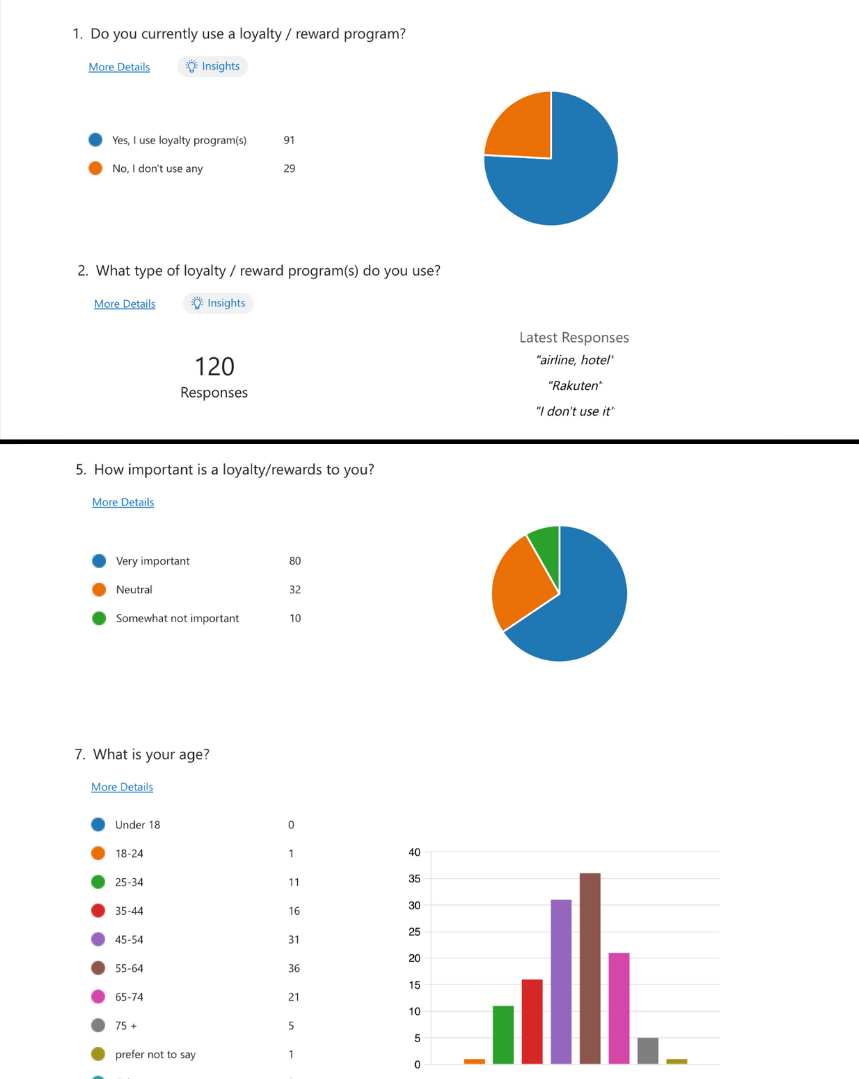
Our research generated over 600 survey responses across the UK and US, complemented by 30 in-depth user interviews. This provided a clear view of user expectations and behaviors around loyalty programs.
Key insights included:
Reward Preferences:
Users were split between points-based and monetary rewards, with regional differences influencing preference.Existing Engagement:
Many participants were already enrolled in loyalty programs, allowing us to compare successful models with those perceived as ineffective.Perceptions & Pain Points:
Users shared what they valued most (simplicity, transparency, flexibility) and what frustrated them (complex redemption rules, unclear benefits).
Together, these insights gave us a practical framework: design a loyalty program that felt simple, transparent, and rewarding, while also meeting the business need for increased account creation and repeat bookings.
What the data revealed
What the data revealed
Manchester Airport (UK)
Manchester Airport (UK)
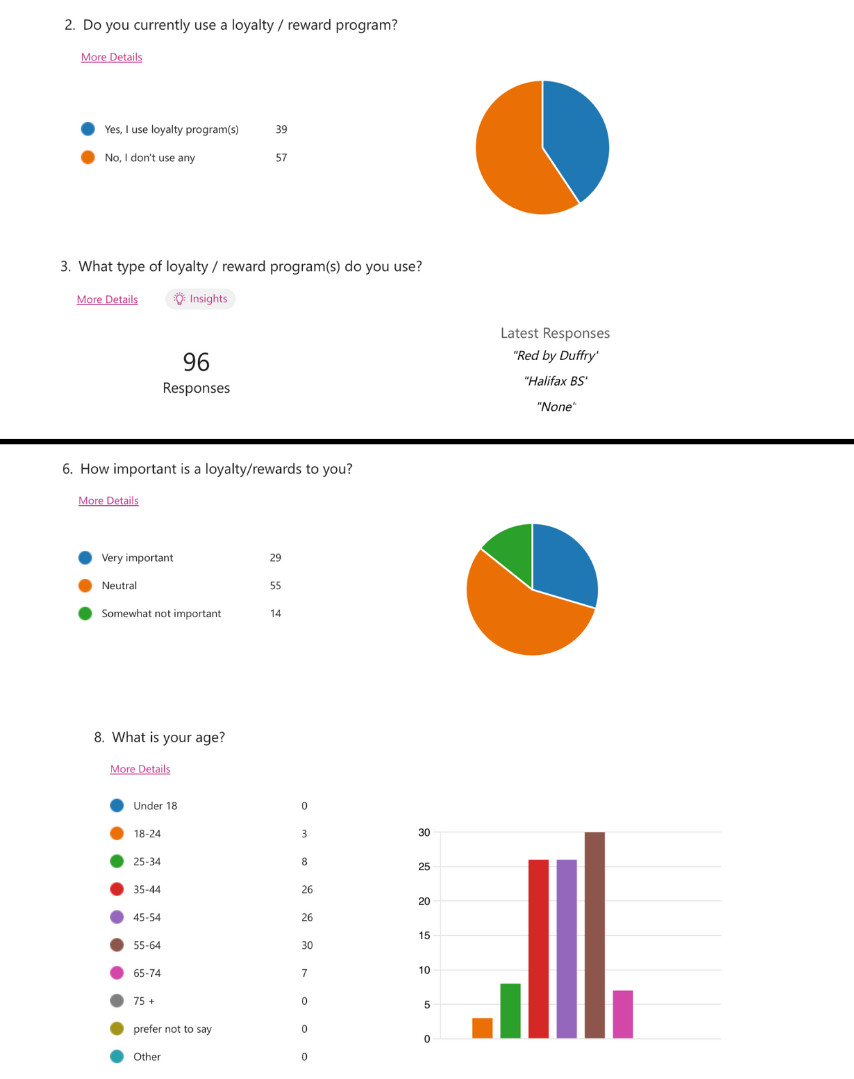
Airport Parking Reservations (US)
Airport Parking Reservations (US)
Pain Points |
Takes a long time to accumulate enough point to use them |
I don't so much like ones that offer tiny rewards (10% off after 10 purchases which takes years to accumulate) or in which you're only significantly rewarded if you spend huge amounts of money first. |
Airline and hotel reward programs because it's very difficult to use them enough to get anything useful back. |
Points systems - takes an age. prefer card with instant savings advertised. |
I don’t really like where you get to choose money off for example 20% off at Halfords or 15% at champneys. I prefer to get vouchers that i can spend or cash. |
Too small reward, not worth the hassle. |
I don't like when they are too complicated to use. |
I don’t use ones that have many steps or ask me to spend money on things I’m not going to buy normally. |
The credit cards that give you cash back but restrict how you can claim that cash back. Most have changed that but some still have restrictions. |
Understanding user expectations for rewards
To better understand user expectations around loyalty, we extended our research into credit card rewards programs, one of the most widely used and influential models of customer incentives.
Through competitor analysis and user interviews, we explored:
-
Reward Structures:
Which types of rewards (cashback, points, perks) resonated most with users. -
User Behavior :
How people use their credit cards to maximize rewards and what habits transfer to other loyalty programs. -
Pain Points:
Frustrations with current programs, such as overly complex redemption processes or unclear benefits.
These findings provided a clear benchmark: users valued simplicity, transparency, and tangible benefits above all else.
This insight directly shaped our design direction, ensuring our loyalty solution avoided common pitfalls while aligning with real-world expectations.
Understanding User Motivations
Understanding User Motivations


From Insights to Action
Following the synthesis of research findings, I translated insights into low-fidelity wireframes and a defined UI flow.
To align stakeholders and secure buy-in, I facilitated a cross-functional workshop with leaders from product, commercial, operations, and UX. In this session, I presented both the research outcomes and my proposed design strategy, framing how the solution would meet business objectives while delivering a seamless user experience.
This collaborative alignment ensured that design decisions were grounded in evidence and business priorities, creating momentum for the project to advance confidently into the design phase.
Lo Fi wireframes
Lo Fi wireframes

Building Only What Users Value
During stakeholder alignment, we made a strategic decision to prioritize development of a B2B loyalty program first, deferring the B2C version until later.
This focus ensured that CAVU’s white label platform offered a complete enterprise-ready feature set and a critical differentiator when pitching to airports seeking seamless loyalty integration.
To kick off this initiative, I facilitated an ideation session with cross-functional stakeholders. Together, we mapped ideas, voted on priorities, and aligned them against both user research findings and the business growth strategy provided by the Operations Director.
This process created clarity on what to build first and gave the project a clear direction moving into design.

Prototyping for Alignment and Validation
Building on the outcomes of the ideation workshop, I developed a prototype designed to achieve two objectives:
-
Stakeholder Alignment:
Provide a tangible asset that could be showcased at a shareholder board meeting, demonstrating how the proposed loyalty program would integrate seamlessly into the existing white-label platform. -
User Validation:
Conduct usability testing with real users to gather actionable insights and refine the product direction before handoff to development.
From a business perspective, the loyalty program was a strategic necessity: several prospective clients had identified its absence as a potential deal-breaker.
By designing the solution to integrate smoothly into the existing booking flow, the prototype not only strengthened the white-label product’s value proposition but also differentiated it in a competitive market.
Importantly, the design was structured to complement, not compete with the future CAVU Rewards B2C program, ensuring a clear roadmap for phased growth.
B2B Loyalty prototype - Earn Journey

B2B Loyalty prototype - Earn Journey
Validating the prototype
After developing the functional prototype, I conducted usability testing with 15 participants through 30-minute interviews. Each user followed a guided set of tasks while providing continuous feedback, allowing me to capture both behavioral and verbal insights.
The results were highly positive, users found the experience intuitive and engaging.
At the same time, I identified valuable feedback on usability pain points and opportunities for refinement. These insights were incorporated into subsequent iterations, ensuring the design addressed real user needs.
Armed with a tested prototype and a comprehensive usability report, I presented the solution to the heads of UX and product, and later to the company’s directors and shareholders.
The response was overwhelmingly positive, with only minor adjustments requested. These refinements further strengthened the B2B loyalty program design.
In parallel, I also integrated complementary improvements, including a new checkout summary, flexible payment options, and an express checkout flow, designed to increase conversions and enhance the overall user experience across the platform.
Payment options - Express checkout

Payment options - Express checkout
Data-Driven Decision Making
After incorporating initial refinements, I conducted further user testing to evaluate the express checkout flow and explore interest in a flexible payment option. To supplement these sessions, I distributed surveys across two US and two UK sites.
The results were conclusive: while express checkout tested strongly, over 90% of users indicated they had no interest in flexible payments. Since this feature had been proposed by one of the directors, I compiled a detailed report combining survey data and usability insights.
The findings made a clear recommendation: exclude the feature, as it added complexity without aligning with user needs.
This moment highlighted the value of a user-centered approach. CAVU’s slogan, “we know the passenger like no other”, meant we had a responsibility to act on what users were telling us: build the features they wanted, and leave out the ones they didn’t.
By grounding our product roadmap in evidence, we strengthened both user trust and business credibility.

Designing a Tailored Travel Experience
One of the key features we prototyped was a personalized booking flow powered by flight data. Research across thousands of survey responses and user interviews revealed that travelers were highly receptive to entering their flight number at the start of the process. This allowed the system to automatically curate relevant products and services for their journey, removing the need for users to manually search.
For many travelers, particularly first-time visitors to airports, this level of personalization simplified decision-making. By leveraging flight information, the platform could recommend the right services at the right time, while filters allowed users to further prioritize based on cost, convenience, or speed.
This approach transformed the booking process from a generic transaction into a tailored travel experience, aligning with both user needs and the business goal of driving engagement and conversions.


Impact & Reflection
The decisions I drove and communicated to directors directly influenced the integration of features that might otherwise have been overlooked. Equally important, rigorous testing allowed us to challenge board-level assumptions and remove concepts that did not serve our users.
This project marked a turning point for the UX department at CAVU. Still in its early stages, the team was establishing its role within the company and proving the value of user-centered design at the highest levels of decision-making. For the first time, insights from UX were elevated to the head of product, the commercial division, and shareholders, shaping both product strategy and business outcomes.
I take pride not only in my design contributions but also in helping establish UX as a trusted partner within the organization. By implementing processes for evidence-based decision-making, I strengthened collaboration across departments and created a framework that positioned UX as an essential driver of growth and innovation.